Services
Resin bound and tarmac driveways, explained properly
Two very different materials, one principle: the finish is only as good as the preparation beneath it. Here is what each involves and when we would recommend it.
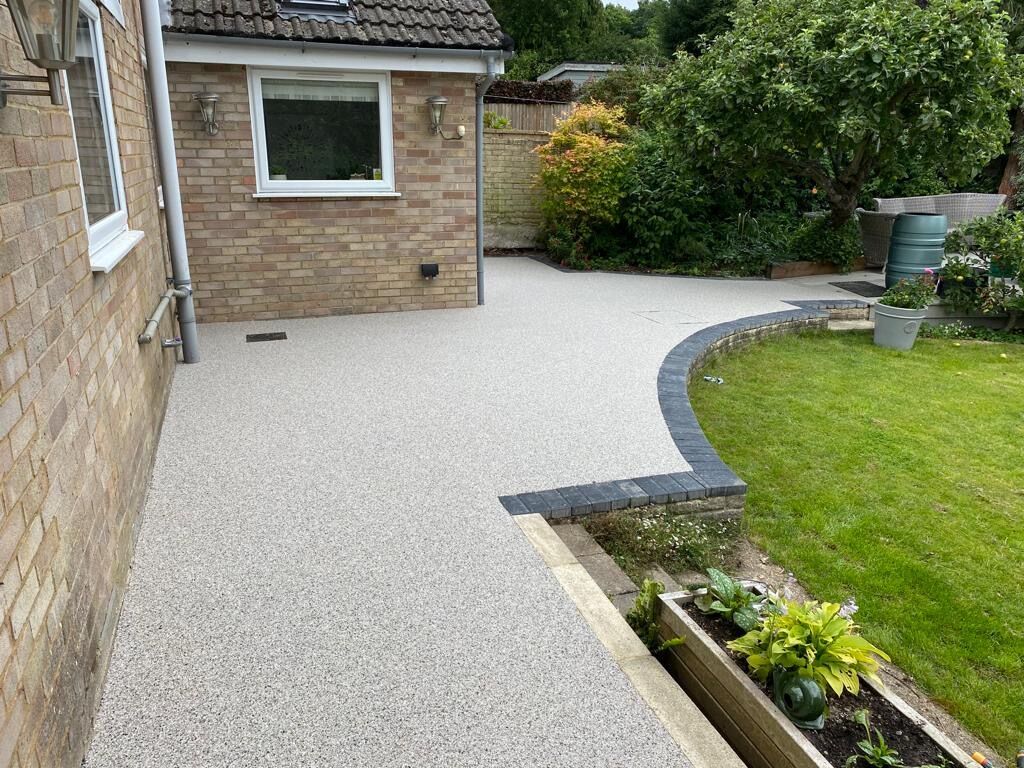 Project photo
Resin bound driveways
Resin bound is a mix of clean, dried natural aggregate and a clear UV-stable resin, trowelled by hand onto a prepared base to create a smooth, seamless and permeable surface.
How it is built
After excavation and edging, a compacted sub-base is laid, followed by an open-graded asphalt or similar porous layer designed to let water through. The resin and aggregate are mixed in small batches and trowelled to an even depth suited to vehicle use.
Why homeowners choose it
A clean, natural-stone look with no loose stones, no joints for weeds and a wide range of tones. Properly built, it can help meet the expectation for permeable front garden surfaces.
Where to be careful
It should not be laid over cracked or moving bases, in wet weather, or with damp aggregate. Resin bonded, a different scatter-coat product, is not the same and is not permeable.
Choosing a blend
Natural blends range from cool silvers and charcoals to warm honeys and buffs. Physical samples viewed against your brickwork in daylight are the most reliable way to choose.
Often a good fit for
- Front gardens and statement entrances
- Paths, patios and step-free thresholds
- Replacing loose gravel
- Homes where permeability is a priority
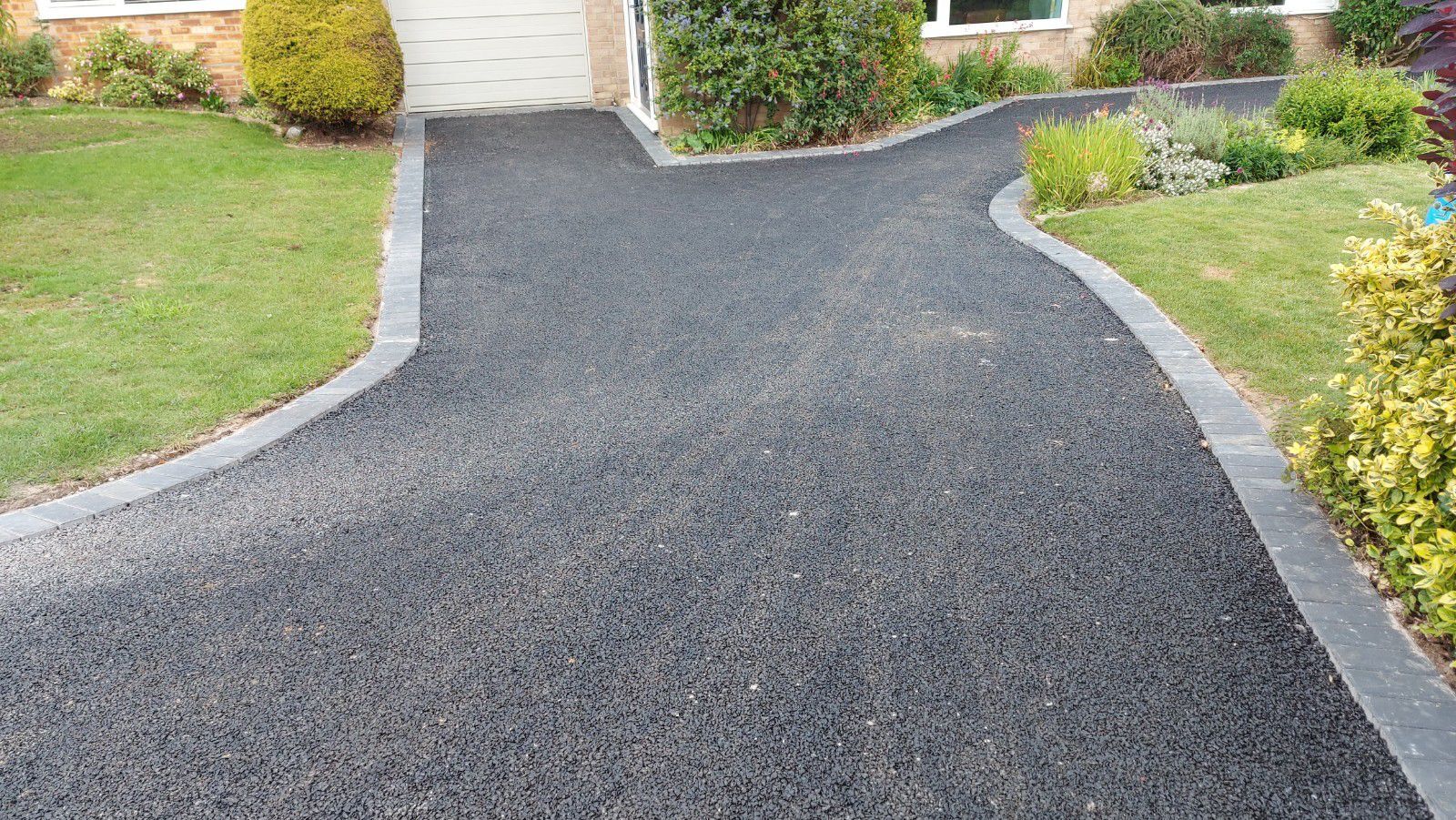 Project photo
Tarmac driveways
Tarmac, more precisely asphalt macadam, is a hot-laid bitumen-bound surface rolled to a dense, durable finish. It is a practical, proven material that looks sharp when edged well.
How it is built
Excavation, edge restraints and a compacted sub-base, then typically a binder course and a finer surface course, each laid hot and rolled. Falls and drainage are designed in because standard tarmac is not permeable.
Why homeowners choose it
Robust under heavy daily use and tight turning, usually more economical per square metre, and well suited to long approaches.
Where to be careful
Water must be directed somewhere suitable such as a soakaway or permeable area within the property. Thin overlays on poor bases fail early.
Making it look premium
A contrasting granite or sett border, crisp straight edges and accurate levels turn a utilitarian surface into a considered one.
Often a good fit for
- Long or wide driveways
- Multi-car households with heavy turning
- Rental properties needing robust upkeep
- Tarmac approach with resin apron combinations
Details that complete the job
Edging and borders
Granite setts, block or steel edging set on concrete haunching.
Drainage
Channel drains, soakaways and correct falls away from buildings.
Ducting
Space for future gates, lighting or EV charging before the surface goes down.
Covers and chambers
Recessed infill covers or neat surrounds to keep access clear.
Not sure which surface suits your plot?
That is exactly the conversation worth having before anything is dug. Call, or send a few details.